
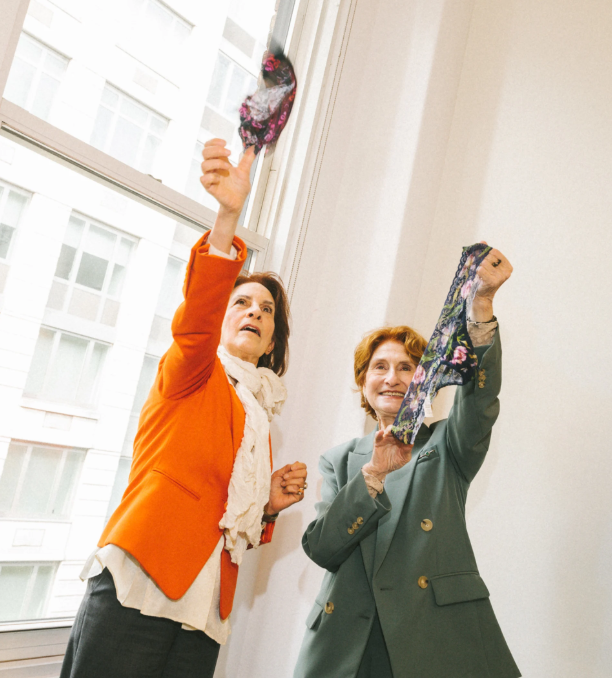
For nearly two years, Gale Epstein and Lida Orzeck waited for this moment. When the call finally came around noon, the day before Christmas Eve, the Hanky Panky co-founders were already six blocks south of their office near the Garment District in Manhattan, about to walk into Danny Meyer’s Union Square Cafe for lunch. They stepped under some scaffolding to shield themselves from the ongoing sleet, and within five minutes, it was all over: They closed the sale of their 48-year-old lingerie brand.
Crown Brands Group, a newly formed private equity firm in New York City, acquired the storied label for an undisclosed sum. Crown is backed by G72 holdings, the family office of Raymond Gindi, whose family co-founded the Century 21 department stores. As part of the deal, Crown partnered with the Rafar Group, a manufacturer, supplier, and brand builder in the intimates space, which will serve as the operational lead, overseeing day-to-day product design, development, e-commerce operations, and distribution going forward.
It wasn’t an easy decision to sell after almost half a century, say Epstein, 79, and Oreck, 78. In the end, it came down to the current retail environment.
Struggling wholesalers and much-needed boost
The apparel business has changed dramatically since Epstein and Orzeck cobbled together $15,000 of their savings and launched Hanky Panky in 1977, the same year Victoria’s Secret came on to the scene. The brand became a household name with its signature one-size-fits-all thong made of stretchy lace. The design, which combined comfort and sex appeal, developed a cult following among consumers, who picked up the individually rolled panties at boutique checkout counters and department store displays before dropping them into Christmas stockings and sorority baskets.
But those wholesalers, which accounted for the largest chunk of Hanky Panky’s sales for most of the company’s existence, have increasingly struggled. Before going private in May of last year, Nordstrom, the brand’s single-biggest account, faced years of anemic sales and declining foot traffic. Even growth from direct-to-consumer sales and other e-commerce channels such as Amazon wasn’t enough to offset the contraction in wholesale—especially given the marketing costs required to drive online sales, say the co-founders. Up against those economic headwinds, their company needed an infusion of cash.
“There’s so much more competition now than ever before, with hefty financing behind it,” Epstein tells Inc. “We needed some boost.”
Orzeck, who served as the company’s long-time CEO before stepping back from the role in 2021, adds, “The whole idea was to make sure that the company thrives in the future.”
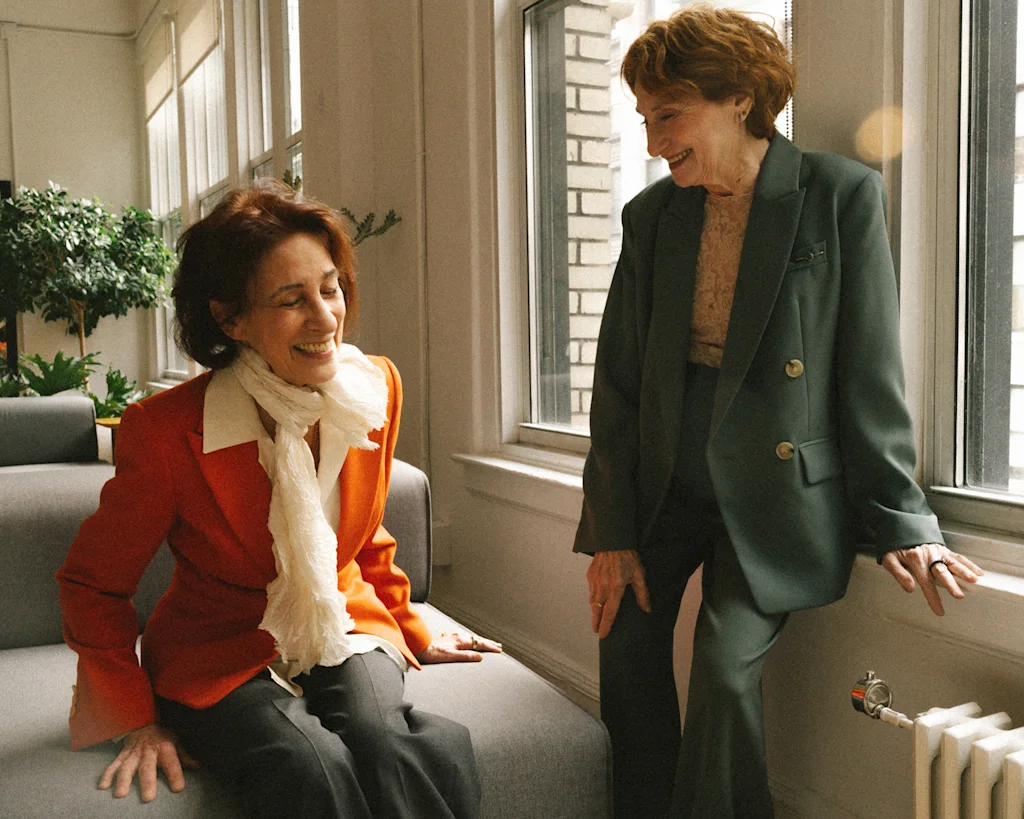
Scaling a legacy brand for a new generation of customers
That’s where Crown and Rafar stepped in. The new owner and operator have an ambitious plan to scale the legacy brand into adjacent product categories, such as loungewear, sleepwear, swimwear, and bodysuits—and also into international markets, particularly Europe and Asia. Crown co-founder and CEO Raymond Dayan, 30, says he wants to own Hanky Panky for the next 50 years. He compared the brand’s growth potential to Skims; the intimates and apparel brand co-founded by Kim Kardashian scored a $5-billion valuation last year after increasing revenue by 438 percent in the span of three years.
“Historically, they’ve been known for the world’s most comfortable thong,” says Dayan. “Their business has been really just underwear, and there’s so much more opportunity for the brand to expand.”
The man leading day-to-day operations, Rafar Group CEO Yossi Nasser, knows how to grow brands in the lingerie category. Nasser, 45, co-founded the intimates brand Lively with serial entrepreneur Michelle Cordeiro Grant, and together they scored a $105-million exit within three years. With Hanky Panky, Nasser sees an opportunity to expand demographically as well, going beyond the Gen-X and Millennial audiences, who already know the brand, to Gen-Z shoppers, where Hanky Panky has much less brand recognition.
He also sees plenty of room to double down on e-commerce. “It’s a healthy business,” says Nassar. “There’s a lot of potential there still.”
That was the sales pitch that landed with Epstein and Orzeck, who heard it late into a “very long and onerous” search for a buyer that lasted nearly two years. They brought on Consensus, a consumer-focused boutique investment bank in New York City, to lead the effort, and it initially went out to several dozen companies to test the industry’s appetite. The co-founders say they received immediate interest, which was flattering, but finding the right partner proved more complex.
Matching the right buyer with the brand
While they kept an open mind on potential investors or buyers, Epstein and Orzeck maintained a list of key priorities. They wanted an agreement that would sustain the product’s quality without outsourcing its domestic manufacturing, keep the Hanky Panky offices, allow some room for them to stay involved, and protect as many employees as possible. Those edicts meant walking away from some potential deals, a decision that the co-founders were comfortable with after having bootstrapped Hanky Panky and maintaining majority ownership for more than four decades. (The only person beyond the co-founders who had shares in the company was Brenda Berger, who took over as CEO from Orzeck and had a small stake.)
“This process, it’s not dissimilar to real estate,” says Orzeck. “You know you’re looking for a certain number of rooms and certain square footage and location, but the house has to feel right, and that was our gut speaking.”
That feeling goes beyond numbers, the co-founders say. It comes down to trust. It has to, because giving up ownership means ceding control. Epstein and Orzeck were matter-of-fact when speaking about the realities of any acquisition, realities that entrepreneurs need to consider throughout a sale process. Once the deal closes, there are no more guarantees about product quality, sourcing, manufacturing, founder involvement, or even whether the brand will continue to operate.
Epstein and Orzeck chose Crown and Rafar, because they believe the new owners understand the legacy and ethos of the brand and will be the most true to their word about carrying it into the future.
Looking back, the two friends turned co-founders say they had no idea just how much longevity their underwear designs would have. That legacy was even on display at their pre-Christmas Eve lunch. When Epstein and Orzeck sat down at their table, their waitress asked the usual question that starts meal service at white-table-clothed restaurants: Were they celebrating a special occasion?
They told the waitress they had actually just sold their company and asked if she had ever heard of Hanky Panky. In their telling, not only had the waitress heard of them, but she even shared that she was wearing their underwear. By the end of their lunch, she brought out a special dessert topped with drizzled chocolate syrup depicting a pair of panties. A confectionary culmination of their careers.
“The product is the essence of who we are, and the customer gets that, whether she knows it or not,” says Epstein. “So we held out as long as we could.”